
LINK-ED: Strengthening Rural Emergency Care
To support rural communities, Interior Health (IH) working with the Ministry of Health to explore a new way of delivering emergency care.
The IH LINK-ED pilot combines in-person and virtual physician support for patients needing emergency care overnight.
The goal?
- Reliable overnight access
- Better work-life balance for physicians
- Strong, dependable care for the communities that count on us
We are collaborating with physicians, nursing staff and community leaders in Lillooet, Princeton, Clearwater and Nakusp to pilot LINK-ED and assess its feasibility beginning winter 2025.
Have your say
We want to hear from community members to ensure we meet your needs. On this page, you can follow the pilot’s progress, share feedback or ask questions.
To support rural communities, Interior Health (IH) working with the Ministry of Health to explore a new way of delivering emergency care.
The IH LINK-ED pilot combines in-person and virtual physician support for patients needing emergency care overnight.
The goal?
- Reliable overnight access
- Better work-life balance for physicians
- Strong, dependable care for the communities that count on us
We are collaborating with physicians, nursing staff and community leaders in Lillooet, Princeton, Clearwater and Nakusp to pilot LINK-ED and assess its feasibility beginning winter 2025.
Have your say
We want to hear from community members to ensure we meet your needs. On this page, you can follow the pilot’s progress, share feedback or ask questions.
-
How LINK-ED, a new rural emergency care model, took shape in its first month
Share How LINK-ED, a new rural emergency care model, took shape in its first month on Facebook Share How LINK-ED, a new rural emergency care model, took shape in its first month on Twitter Share How LINK-ED, a new rural emergency care model, took shape in its first month on Linkedin Email How LINK-ED, a new rural emergency care model, took shape in its first month linkInnovation rarely arrives with a roadmap. More often, it begins with a willingness to step into something unfamiliar, especially in rural health care, where challenges are evolving.
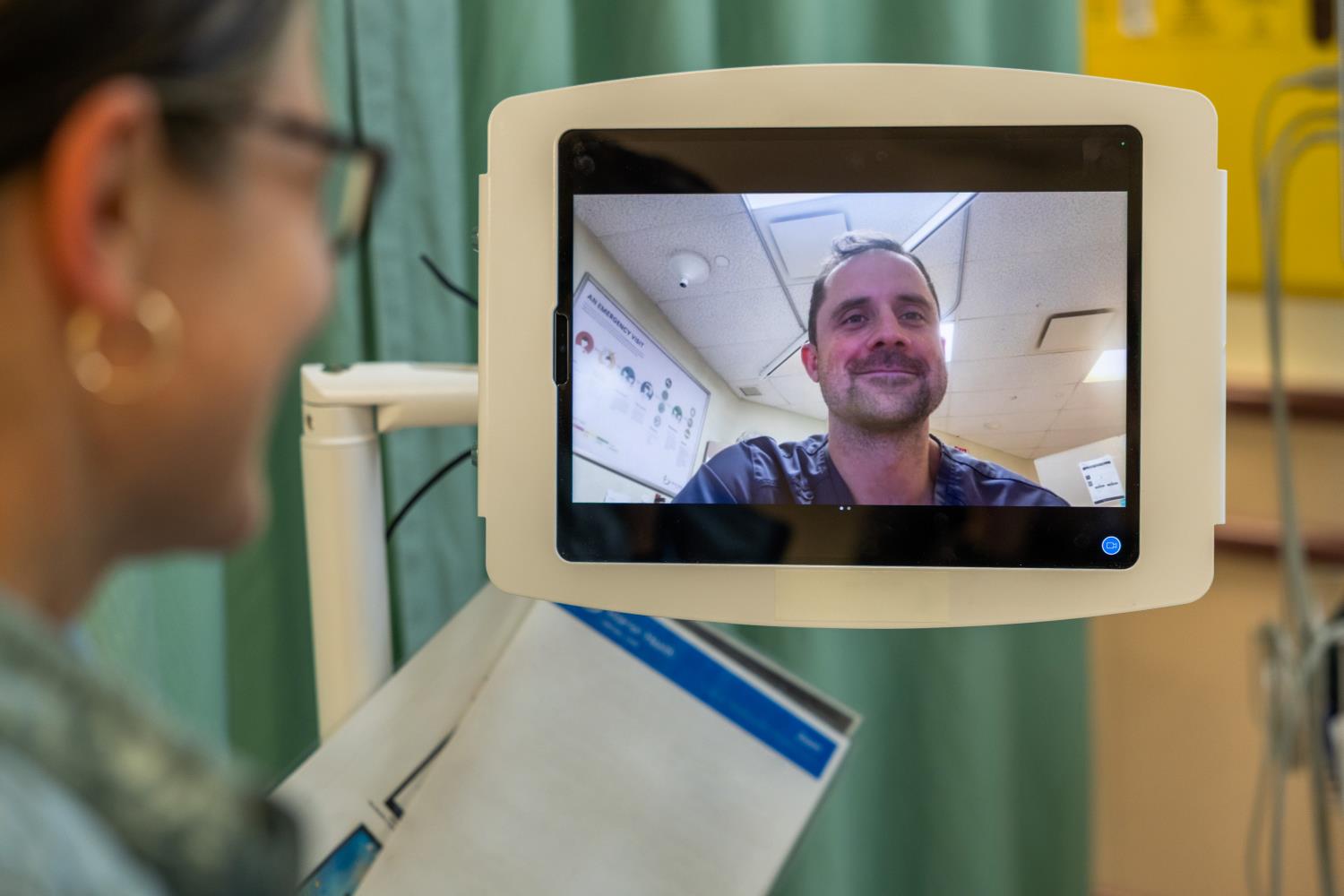
That’s the reason behind LINK‑ED, a pilot project Interior Health (IH) launched in December 2025 to sustain overnight emergency care in small hospitals. Through this new model, on‑site emergency-trained nurses in Lillooet, Clearwater, Nakusp and Princeton can connect with a doctor in another community through secure video or phone overnight to provide patient care. If someone needs hands‑on care quickly, a local doctor is always available to help.The pilot started graduallyContinue reading
Innovation rarely arrives with a roadmap. More often, it begins with a willingness to step into something unfamiliar, especially in rural health care, where challenges are evolving.
That’s the reason behind LINK‑ED, a pilot project Interior Health (IH) launched in December 2025 to sustain overnight emergency care in small hospitals. Through this new model, on‑site emergency-trained nurses in Lillooet, Clearwater, Nakusp and Princeton can connect with a doctor in another community through secure video or phone overnight to provide patient care. If someone needs hands‑on care quickly, a local doctor is always available to help.The pilot started gradually, with one doctor supporting their home hospital in person and one additional site virtually per night. This gave teams time to learn new tools and build confidence working across distances.
For long‑time Lillooet physician Dr. Nancy Humber, joining early was an easy decision.
“No one wants to see any emergency departments close,” Dr. Humber said. “It’s important for the emergency care teams to work collaboratively across sites to find sustainable ways to minimize the chance of this happening.”
A formal evaluation is underway, but early results have been encouraging:
- Virtual care added a meaningful layer of support. On a typical 12‑hour night, a LINK‑ED physician supported about two patients in person and two more virtually at another site.
- In several cases, on‑site nurses and virtual doctors were able to manage emergent situations without requiring additional support from the local on-call doctor
- Patient safety was maintained, and communication between sites remained strong
- Most importantly, there were no emergency service interruptions in the first two months of the trial (Dec. 8, 2025 to Feb. 8, 2026)
As with any new model, there has been a learning curve. Both physician and nursing staffing require ongoing improvement. Supporting another site requires adjusting to new processes and collaborating virtually with colleagues who aren’t physically in the room. Regular check‑ins have helped teams address issues quickly, and the process continues to improve each shift.
Physician lead Dr. Wessel Joubert expects the workload to ease as more physicians join the rotation:
“We’re working toward full participation from all 24 physicians across the four sites. With full coverage, each physician would support multiple sites only once per month instead of weekly. That means less on‑call frequency and more balance.”
The next phase is underway, with doctors now supporting two additional sites virtually each night. IH is also preparing to move all four LINK‑ED hospitals to full electronic medical records—a shift that will create a single, shared source of patient information and improve communication across communities.
Reflecting on the first month of the pilot, Karen Cooper, project co-lead and executive director of clinical operations for the Thompson-Cariboo Rural, noted:
“System-level innovation often requires a lot of heavy lifting at the beginning and a willingness to learn and adapt as we go. This is no small feat, so I’m truly grateful for the collaboration and support from everyone in the frontline. As we continue this journey, the spirit of learning and partnership will remain at the heart of the work.”
-
LINK‑ED pilot launches: What it means for rural communities
Share LINK‑ED pilot launches: What it means for rural communities on Facebook Share LINK‑ED pilot launches: What it means for rural communities on Twitter Share LINK‑ED pilot launches: What it means for rural communities on Linkedin Email LINK‑ED pilot launches: What it means for rural communities linkThis week, Interior Health is bringing in a new virtual care pilot, IH LINK-ED, to emergency departments in Lillooet, Clearwater, Nakusp and Princeton.
IH LINK-ED blends in person care with virtual physician support, so people living in these communities can count on having more reliable access to emergency departments overnight. The benefits to patients are same quality care, fewer service interruptions and no long travel unless specialized care is needed.
How does it work?
- When patients walk into an ED, an emergency-trained nurse will determine the level of care needed.
- The nurse may connect with a doctor in another community through a secure video or phone call to review patient condition and guide the treatment
- If patients need rapid, hands-on care, a local doctor is always on standby in each community and can come to the hospital to help
Care teams will ease into the new model by trying it out a few nights each week, while keeping regular in person coverage on the other nights. The plan is to build up gradually, with full seven day a week implementation expected in the new year.
To learn more, visit: https://www.interiorhealth.ca/media/interior-health-link-ed-pilot-project-begins
To sign up for updates, or or submit your feedback/questions, visit: https://engageih.ca/link-ed
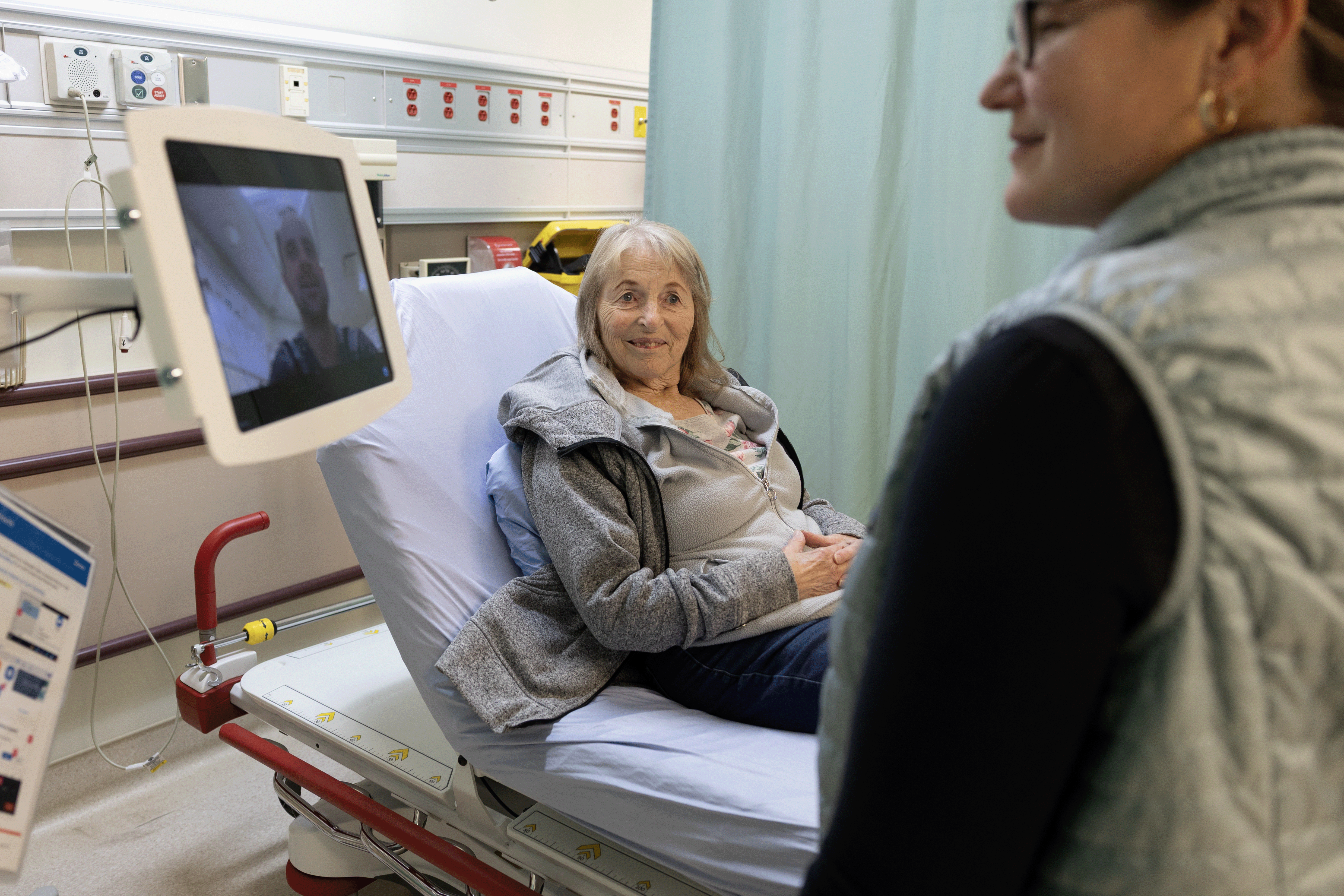
This week, Interior Health is bringing in a new virtual care pilot, IH LINK-ED, to emergency departments in Lillooet, Clearwater, Nakusp and Princeton.
IH LINK-ED blends in person care with virtual physician support, so people living in these communities can count on having more reliable access to emergency departments overnight. The benefits to patients are same quality care, fewer service interruptions and no long travel unless specialized care is needed.
How does it work?
- When patients walk into an ED, an emergency-trained nurse will determine the level of care needed.
- The nurse may connect with a doctor in another community through a secure video or phone call to review patient condition and guide the treatment
- If patients need rapid, hands-on care, a local doctor is always on standby in each community and can come to the hospital to help
Care teams will ease into the new model by trying it out a few nights each week, while keeping regular in person coverage on the other nights. The plan is to build up gradually, with full seven day a week implementation expected in the new year.
To learn more, visit: https://www.interiorhealth.ca/media/interior-health-link-ed-pilot-project-begins
To sign up for updates, or or submit your feedback/questions, visit: https://engageih.ca/link-ed
Signup Banner
Lifecycle
-
Soft Launch
LINK-ED: Strengthening Rural Emergency Care is currently at this stageCare teams at four emergency departments will start piloting the new model a few nights per week, while continuing with regular in-person care on other nights.
-
Three-month Evaluation
this is an upcoming stage for LINK-ED: Strengthening Rural Emergency Care -
Six-month Evaluation
this is an upcoming stage for LINK-ED: Strengthening Rural Emergency Care -
One-year Evaluation
this is an upcoming stage for LINK-ED: Strengthening Rural Emergency Care
